Buy welp.eu ?
We are moving the project
welp.eu .
Are you interested in purchasing the domain
welp.eu ?
domain@kv-gmbh.de · 0541-91531010
Buy welp.eu ?
Why are demonstrative pronouns called demonstrative pronouns?
Demonstrative pronouns are called demonstrative because they demonstrate or point to a specific noun or pronoun in a sentence. They help to indicate the position or location of the noun or pronoun in relation to the speaker or listener. By using demonstrative pronouns such as "this," "that," "these," and "those," speakers can make their communication more precise and clear by specifying which person, place, thing, or idea they are referring to. **
What is the difference between demonstrative pronouns and demonstrative determiners in French?
In French, demonstrative pronouns (ce, cette, ces) stand alone to replace a noun, while demonstrative determiners (ce/cet, cette, ces) are used with a noun to indicate which specific thing or person is being referred to. For example, "Ce livre est intéressant" uses the demonstrative determiner "ce" with the noun "livre," while "Celui-ci est intéressant" uses the demonstrative pronoun "celui-ci" to replace the noun "livre." Demonstrative determiners are used before a noun, while demonstrative pronouns are used in place of a noun. **


Similar search terms for Demonstrative
Top-Angebote
Products related to Demonstrative:
-
Souvenir Press Living the Artist's Way: An Intuitive Path to Creativity by Julia Cameron - Paperback Self-Help Book on Creativity & GuidanceDiscover Julia Cameron's intuitive path to creativity with Living the Artist's Way, a practical companion for anyone seeking to deepen their creative recovery and quieten self-doubt. This brand new paperback from Souvenir Press invites readers into a deeply personal exploration of how guidance, both spiritual and intuitive, can transform the creative life. Cameron's signature practices, including Morning Pages, Artist Dates, and Walks, are built upon in this six-week programme, introducing readers to Writing for Guidance as a fourth core discipline. A warm and supportive guide for anyone looking to reconnect with their creativity and overcome self-doubt, Living the Artist's Way is a must-read for anyone on a journey of creative discovery.9,99 £*Shipping: 2,99 £Secure redirect to the provider
-
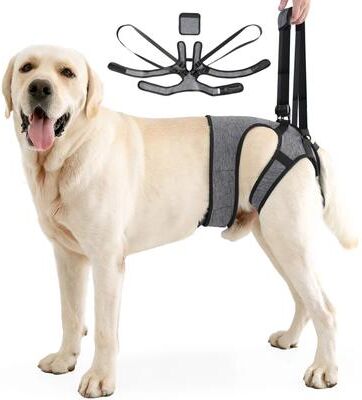
Inspire Select Dog Lift Support Harness Adjustable Rear Leg Support Sling For Mobility Assistance gray xlHelp your furry companion move with greater comfort and confidence using this supportive dog lift harness. Designed to provide reliable assistance for pets with mobility challenges, this dog support sling helps reduce strain while walking, climbing...90,98 $*Shipping: 0,00 $Secure redirect to the provider
-
Inspire Select Dog Lift Support Harness Adjustable Rear Leg Support Sling For Mobility Assistance gray mHelp your furry companion move with greater comfort and confidence using this supportive dog lift harness. Designed to provide reliable assistance for pets with mobility challenges, this dog support sling helps reduce strain while walking, climbing...148,95 $*Shipping: 0,00 $Secure redirect to the provider
-
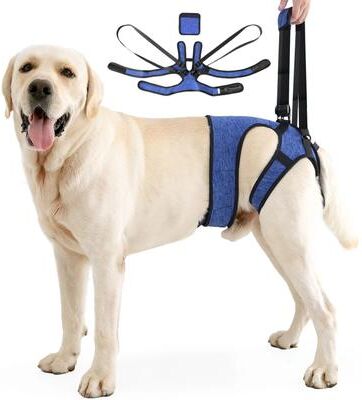
Inspire Select Dog Lift Support Harness Adjustable Rear Leg Support Sling For Mobility Assistance blue xlHelp your furry companion move with greater comfort and confidence using this supportive dog lift harness. Designed to provide reliable assistance for pets with mobility challenges, this dog support sling helps reduce strain while walking, climbing...90,98 $*Shipping: 0,00 $Secure redirect to the provider



-
What are demonstrative pronouns and relative pronouns?
Demonstrative pronouns are pronouns that are used to point to specific things or people. Examples of demonstrative pronouns include "this," "that," "these," and "those." Relative pronouns are pronouns that introduce dependent clauses and connect them to independent clauses. Examples of relative pronouns include "who," "whom," "whose," "which," and "that." **
-
Does French have the demonstrative determiner "cettes"?
No, French does not have the demonstrative determiner "cettes." The correct forms of the demonstrative determiner in French are "cette" for singular feminine nouns, "ce" for singular masculine nouns, and "ces" for plural nouns regardless of gender. "Cettes" is not a standard form in the French language. **
-
How do I use demonstrative pronouns correctly?
Demonstrative pronouns, such as "this," "that," "these," and "those," are used to point out specific people, places, or things. Use "this" and "these" to refer to something that is nearby or close in time, and use "that" and "those" to refer to something that is farther away or in the past. For example, you can say "This is my book" when referring to a book that is nearby, and "That was a great movie" when referring to a movie that you saw in the past. Make sure to match the demonstrative pronoun with the singular or plural noun it is replacing, and use the appropriate form (this/that or these/those) based on the distance or time. **
-
What is the demonstrative pronoun in French?
The demonstrative pronouns in French are "ce," "cette," "ces," and "cet" for singular and plural forms. These pronouns are used to point out or demonstrate specific people, places, or things. They agree in gender and number with the noun they refer to, and their usage depends on the proximity of the object being referred to. **

How does demonstrative silence manifest itself in lovers?
Demonstrative silence in lovers can manifest itself in various ways. It may occur during moments of deep emotional connection, where words are not needed to express their feelings for each other. It can also be a form of understanding and support, where one partner chooses to remain silent to give the other space to process their thoughts or emotions. In some cases, demonstrative silence can be a way for lovers to communicate without words, using nonverbal cues and gestures to convey their love and affection. **
Is it a demonstrative or personal pronoun in Latin?
In Latin, "hic" is a demonstrative pronoun. Demonstrative pronouns in Latin are used to point out specific things or people, while personal pronouns are used to refer to individuals or groups. "Hic" specifically means "this" or "these" and is used to indicate something close to the speaker. **
Top-Angebote
Products related to Demonstrative:
-
Bluebird Mentors: How to Help and Be Helped by Russell Brand – Personal Growth & Guidance BookRussell Brand Mentors How to Help and Be Helped ‘I have mentors in every area of my life, as a comic, a dad, a recovering drug addict, a spiritual being and as a man who believes that we, as individuals and the great globe itself, are works in progress and that through a chain of mentorship we can improve individually and globally, together . . . One of the unexpected advantages my drug addiction granted is that the process of recovery that I practise includes a mentorship tradition. I will encourage you to find mentors of your own and explain how you may better use the ones you already have. Furthermore, I will tell you about my experiences mentoring others and how invaluable that has been on my ongoing journey to self-acceptance and how it has helped me to transform from a bewildered and volatile vagabond to a (mostly) present and (usually) focussed husband and father.’ – Russell Brand Mentors: How to Help and Be Helped describes the impact that a series of significant people have had on the author – from the wayward youths he tried to emulate growing up in Essex, through the first ex-junkie stage, to the people he turns to today to help him be a better father. It explores how we all – consciously and unconsciously – choose guides, mentors and heroes throughout our lives and examines the new perspectives they can bring.1,99 £*Shipping: 1,99 £Secure redirect to the provider
-
Inspire Select Dog Lift Support Harness Adjustable Rear Leg Support Sling For Mobility Assistance blue lHelp your furry companion move with greater comfort and confidence using this supportive dog lift harness. Designed to provide reliable assistance for pets with mobility challenges, this dog support sling helps reduce strain while walking, climbing...157,95 $*Shipping: 0,00 $Secure redirect to the provider
-
Souvenir Press Living the Artist's Way: An Intuitive Path to Creativity by Julia Cameron - Paperback Self-Help Book on Creativity & GuidanceDiscover Julia Cameron's intuitive path to creativity with Living the Artist's Way, a practical companion for anyone seeking to deepen their creative recovery and quieten self-doubt. This brand new paperback from Souvenir Press invites readers into a deeply personal exploration of how guidance, both spiritual and intuitive, can transform the creative life. Cameron's signature practices, including Morning Pages, Artist Dates, and Walks, are built upon in this six-week programme, introducing readers to Writing for Guidance as a fourth core discipline. A warm and supportive guide for anyone looking to reconnect with their creativity and overcome self-doubt, Living the Artist's Way is a must-read for anyone on a journey of creative discovery.9,99 £*Shipping: 2,99 £Secure redirect to the provider
-
Inspire Select Dog Lift Support Harness Adjustable Rear Leg Support Sling For Mobility Assistance gray xlHelp your furry companion move with greater comfort and confidence using this supportive dog lift harness. Designed to provide reliable assistance for pets with mobility challenges, this dog support sling helps reduce strain while walking, climbing...90,98 $*Shipping: 0,00 $Secure redirect to the provider
-
Why are demonstrative pronouns called demonstrative pronouns?
Demonstrative pronouns are called demonstrative because they demonstrate or point to a specific noun or pronoun in a sentence. They help to indicate the position or location of the noun or pronoun in relation to the speaker or listener. By using demonstrative pronouns such as "this," "that," "these," and "those," speakers can make their communication more precise and clear by specifying which person, place, thing, or idea they are referring to. **
-
What is the difference between demonstrative pronouns and demonstrative determiners in French?
In French, demonstrative pronouns (ce, cette, ces) stand alone to replace a noun, while demonstrative determiners (ce/cet, cette, ces) are used with a noun to indicate which specific thing or person is being referred to. For example, "Ce livre est intéressant" uses the demonstrative determiner "ce" with the noun "livre," while "Celui-ci est intéressant" uses the demonstrative pronoun "celui-ci" to replace the noun "livre." Demonstrative determiners are used before a noun, while demonstrative pronouns are used in place of a noun. **
-
What are demonstrative pronouns and relative pronouns?
Demonstrative pronouns are pronouns that are used to point to specific things or people. Examples of demonstrative pronouns include "this," "that," "these," and "those." Relative pronouns are pronouns that introduce dependent clauses and connect them to independent clauses. Examples of relative pronouns include "who," "whom," "whose," "which," and "that." **
-
Does French have the demonstrative determiner "cettes"?
No, French does not have the demonstrative determiner "cettes." The correct forms of the demonstrative determiner in French are "cette" for singular feminine nouns, "ce" for singular masculine nouns, and "ces" for plural nouns regardless of gender. "Cettes" is not a standard form in the French language. **
Similar search terms for Demonstrative
-
Inspire Select Dog Lift Support Harness Adjustable Rear Leg Support Sling For Mobility Assistance gray mHelp your furry companion move with greater comfort and confidence using this supportive dog lift harness. Designed to provide reliable assistance for pets with mobility challenges, this dog support sling helps reduce strain while walking, climbing...148,95 $*Shipping: 0,00 $Secure redirect to the provider
-
Inspire Select Dog Lift Support Harness Adjustable Rear Leg Support Sling For Mobility Assistance blue xlHelp your furry companion move with greater comfort and confidence using this supportive dog lift harness. Designed to provide reliable assistance for pets with mobility challenges, this dog support sling helps reduce strain while walking, climbing...90,98 $*Shipping: 0,00 $Secure redirect to the provider
-
Inspire Select Dog Lift Support Harness Adjustable Rear Leg Support Sling For Mobility Assistance blue mHelp your furry companion move with greater comfort and confidence using this supportive dog lift harness. Designed to provide reliable assistance for pets with mobility challenges, this dog support sling helps reduce strain while walking, climbing...148,95 $*Shipping: 0,00 $Secure redirect to the provider
-
Inspire Select Dog Lift Support Harness Adjustable Rear Leg Support Sling For Mobility Assistance gray sHelp your furry companion move with greater comfort and confidence using this supportive dog lift harness. Designed to provide reliable assistance for pets with mobility challenges, this dog support sling helps reduce strain while walking, climbing...138,99 $*Shipping: 0,00 $Secure redirect to the provider
-
How do I use demonstrative pronouns correctly?
Demonstrative pronouns, such as "this," "that," "these," and "those," are used to point out specific people, places, or things. Use "this" and "these" to refer to something that is nearby or close in time, and use "that" and "those" to refer to something that is farther away or in the past. For example, you can say "This is my book" when referring to a book that is nearby, and "That was a great movie" when referring to a movie that you saw in the past. Make sure to match the demonstrative pronoun with the singular or plural noun it is replacing, and use the appropriate form (this/that or these/those) based on the distance or time. **
-
What is the demonstrative pronoun in French?
The demonstrative pronouns in French are "ce," "cette," "ces," and "cet" for singular and plural forms. These pronouns are used to point out or demonstrate specific people, places, or things. They agree in gender and number with the noun they refer to, and their usage depends on the proximity of the object being referred to. **
-
How does demonstrative silence manifest itself in lovers?
Demonstrative silence in lovers can manifest itself in various ways. It may occur during moments of deep emotional connection, where words are not needed to express their feelings for each other. It can also be a form of understanding and support, where one partner chooses to remain silent to give the other space to process their thoughts or emotions. In some cases, demonstrative silence can be a way for lovers to communicate without words, using nonverbal cues and gestures to convey their love and affection. **
-
Is it a demonstrative or personal pronoun in Latin?
In Latin, "hic" is a demonstrative pronoun. Demonstrative pronouns in Latin are used to point out specific things or people, while personal pronouns are used to refer to individuals or groups. "Hic" specifically means "this" or "these" and is used to indicate something close to the speaker. **
* All prices are inclusive of VAT and, if applicable, plus shipping costs. The offer information is based on the details provided by the respective shop and is updated through automated processes. Real-time updates do not occur, so deviations can occur in individual cases. ** Note: Parts of this content were created by AI.