Buy welp.eu ?
We are moving the project
welp.eu .
Are you interested in purchasing the domain
welp.eu ?
domain@kv-gmbh.de · 0541-91531010
Buy welp.eu ?
What does plasticity mean?
Plasticity refers to the brain's ability to change and adapt in response to new experiences, learning, or injury. It is the brain's capacity to reorganize its structure, function, and connections in order to optimize performance and recover from damage. Plasticity allows the brain to form new neural pathways, strengthen existing connections, and even compensate for lost functions. This ability is crucial for learning, memory, and recovery from brain injuries. **
What does plasticity mean in architecture?
Plasticity in architecture refers to the ability of a material or structure to be molded, shaped, or manipulated in various ways to create different forms and designs. It allows architects to experiment with different shapes, textures, and configurations, leading to innovative and dynamic architectural solutions. Plasticity in architecture also enables buildings to adapt to different functions, environments, and user needs, making them more versatile and responsive. **


Similar search terms for Plasticity
Top-Angebote
Products related to Plasticity:
-
Souvenir Press Living the Artist's Way: An Intuitive Path to Creativity by Julia Cameron - Paperback Self-Help Book on Creativity & GuidanceDiscover Julia Cameron's intuitive path to creativity with Living the Artist's Way, a practical companion for anyone seeking to deepen their creative recovery and quieten self-doubt. This brand new paperback from Souvenir Press invites readers into a deeply personal exploration of how guidance, both spiritual and intuitive, can transform the creative life. Cameron's signature practices, including Morning Pages, Artist Dates, and Walks, are built upon in this six-week programme, introducing readers to Writing for Guidance as a fourth core discipline. A warm and supportive guide for anyone looking to reconnect with their creativity and overcome self-doubt, Living the Artist's Way is a must-read for anyone on a journey of creative discovery.9,99 £*Shipping: 2,99 £Secure redirect to the provider
-
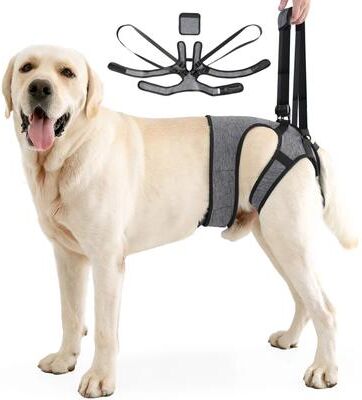
Inspire Select Dog Lift Support Harness Adjustable Rear Leg Support Sling For Mobility Assistance gray xlHelp your furry companion move with greater comfort and confidence using this supportive dog lift harness. Designed to provide reliable assistance for pets with mobility challenges, this dog support sling helps reduce strain while walking, climbing...90,98 $*Shipping: 0,00 $Secure redirect to the provider
-
Inspire Select Dog Lift Support Harness Adjustable Rear Leg Support Sling For Mobility Assistance gray mHelp your furry companion move with greater comfort and confidence using this supportive dog lift harness. Designed to provide reliable assistance for pets with mobility challenges, this dog support sling helps reduce strain while walking, climbing...148,95 $*Shipping: 0,00 $Secure redirect to the provider
-
Inspire Select Dog Lift Support Harness Adjustable Rear Leg Support Sling For Mobility Assistance blue xlHelp your furry companion move with greater comfort and confidence using this supportive dog lift harness. Designed to provide reliable assistance for pets with mobility challenges, this dog support sling helps reduce strain while walking, climbing...90,98 $*Shipping: 0,00 $Secure redirect to the provider



-
How can one represent plasticity without shimmering?
One way to represent plasticity without shimmering is to use matte finishes or textures that absorb light rather than reflect it. This can help create a more subtle and realistic representation of plasticity. Additionally, using soft and gradual transitions between colors or tones can help avoid the appearance of shimmering. Finally, paying attention to the lighting conditions and angles when capturing or rendering the plastic object can also help minimize shimmering and enhance the perception of plasticity. **
-
What is painted with plasticity in art?
In art, plasticity refers to the quality of being able to be molded or shaped. When something is painted with plasticity in art, it means that the artist has used techniques to create a sense of three-dimensionality, depth, and form in their work. This can be achieved through the use of light and shadow, texture, and the manipulation of the medium to create a sense of volume and movement in the artwork. Essentially, painting with plasticity allows the artist to create a sense of physical presence and depth in their work. **
-
What is the spatial depth of plasticity?
The spatial depth of plasticity refers to the extent to which changes in the brain's structure and function occur as a result of learning or experience. It encompasses the range of brain regions and neural networks that are involved in the process of plasticity. This can include changes at the level of individual neurons, as well as larger-scale changes in connectivity and organization across different brain regions. The spatial depth of plasticity is important for understanding how the brain adapts to new information and experiences, and for developing interventions to promote healthy brain function. **
-
What is the difference between spatiality and plasticity?
Spatiality refers to the physical dimensions and arrangement of objects or spaces in a given area, while plasticity refers to the ability of something to be molded, shaped, or changed. Spatiality is concerned with the actual layout and organization of physical elements, such as the distance between objects or the arrangement of rooms in a building. On the other hand, plasticity is about the flexibility and adaptability of a material or structure to be altered or reformed. In essence, spatiality deals with the existing physical space, while plasticity deals with the potential for change within that space. **


Why shouldn't IQ also be changeable if neural plasticity changes myelination and synaptic structure?
While neural plasticity does allow for changes in myelination and synaptic structure, it is important to note that IQ is a complex trait influenced by a combination of genetic and environmental factors. While it is true that the brain can change and adapt, there are limits to how much an individual's IQ can be altered. Additionally, IQ is a measure of cognitive abilities and is influenced by a wide range of factors beyond just neural plasticity, including genetics, early childhood experiences, and education. Therefore, while neural plasticity can certainly impact cognitive abilities, it is not the sole determinant of IQ and its changeability. **
Why should IQ not be changeable if neural plasticity changes myelination and synaptic structure?
IQ should not be changeable simply because neural plasticity changes myelination and synaptic structure. While neural plasticity allows the brain to adapt and reorganize itself in response to learning and experiences, it does not necessarily result in a change in overall intelligence. IQ is a measure of a person's cognitive abilities and is influenced by a combination of genetic and environmental factors, which may not be easily altered through changes in neural plasticity alone. Additionally, IQ is a complex trait that is influenced by multiple factors beyond just neural plasticity, such as genetics, upbringing, and education. **
Top-Angebote
Products related to Plasticity:
-
Bluebird Mentors: How to Help and Be Helped by Russell Brand – Personal Growth & Guidance BookRussell Brand Mentors How to Help and Be Helped ‘I have mentors in every area of my life, as a comic, a dad, a recovering drug addict, a spiritual being and as a man who believes that we, as individuals and the great globe itself, are works in progress and that through a chain of mentorship we can improve individually and globally, together . . . One of the unexpected advantages my drug addiction granted is that the process of recovery that I practise includes a mentorship tradition. I will encourage you to find mentors of your own and explain how you may better use the ones you already have. Furthermore, I will tell you about my experiences mentoring others and how invaluable that has been on my ongoing journey to self-acceptance and how it has helped me to transform from a bewildered and volatile vagabond to a (mostly) present and (usually) focussed husband and father.’ – Russell Brand Mentors: How to Help and Be Helped describes the impact that a series of significant people have had on the author – from the wayward youths he tried to emulate growing up in Essex, through the first ex-junkie stage, to the people he turns to today to help him be a better father. It explores how we all – consciously and unconsciously – choose guides, mentors and heroes throughout our lives and examines the new perspectives they can bring.1,99 £*Shipping: 1,99 £Secure redirect to the provider
-
Inspire Select Dog Lift Support Harness Adjustable Rear Leg Support Sling For Mobility Assistance blue lHelp your furry companion move with greater comfort and confidence using this supportive dog lift harness. Designed to provide reliable assistance for pets with mobility challenges, this dog support sling helps reduce strain while walking, climbing...157,95 $*Shipping: 0,00 $Secure redirect to the provider
-
Souvenir Press Living the Artist's Way: An Intuitive Path to Creativity by Julia Cameron - Paperback Self-Help Book on Creativity & GuidanceDiscover Julia Cameron's intuitive path to creativity with Living the Artist's Way, a practical companion for anyone seeking to deepen their creative recovery and quieten self-doubt. This brand new paperback from Souvenir Press invites readers into a deeply personal exploration of how guidance, both spiritual and intuitive, can transform the creative life. Cameron's signature practices, including Morning Pages, Artist Dates, and Walks, are built upon in this six-week programme, introducing readers to Writing for Guidance as a fourth core discipline. A warm and supportive guide for anyone looking to reconnect with their creativity and overcome self-doubt, Living the Artist's Way is a must-read for anyone on a journey of creative discovery.9,99 £*Shipping: 2,99 £Secure redirect to the provider
-
Inspire Select Dog Lift Support Harness Adjustable Rear Leg Support Sling For Mobility Assistance gray xlHelp your furry companion move with greater comfort and confidence using this supportive dog lift harness. Designed to provide reliable assistance for pets with mobility challenges, this dog support sling helps reduce strain while walking, climbing...90,98 $*Shipping: 0,00 $Secure redirect to the provider
-
What does plasticity mean?
Plasticity refers to the brain's ability to change and adapt in response to new experiences, learning, or injury. It is the brain's capacity to reorganize its structure, function, and connections in order to optimize performance and recover from damage. Plasticity allows the brain to form new neural pathways, strengthen existing connections, and even compensate for lost functions. This ability is crucial for learning, memory, and recovery from brain injuries. **
-
What does plasticity mean in architecture?
Plasticity in architecture refers to the ability of a material or structure to be molded, shaped, or manipulated in various ways to create different forms and designs. It allows architects to experiment with different shapes, textures, and configurations, leading to innovative and dynamic architectural solutions. Plasticity in architecture also enables buildings to adapt to different functions, environments, and user needs, making them more versatile and responsive. **
-
How can one represent plasticity without shimmering?
One way to represent plasticity without shimmering is to use matte finishes or textures that absorb light rather than reflect it. This can help create a more subtle and realistic representation of plasticity. Additionally, using soft and gradual transitions between colors or tones can help avoid the appearance of shimmering. Finally, paying attention to the lighting conditions and angles when capturing or rendering the plastic object can also help minimize shimmering and enhance the perception of plasticity. **
-
What is painted with plasticity in art?
In art, plasticity refers to the quality of being able to be molded or shaped. When something is painted with plasticity in art, it means that the artist has used techniques to create a sense of three-dimensionality, depth, and form in their work. This can be achieved through the use of light and shadow, texture, and the manipulation of the medium to create a sense of volume and movement in the artwork. Essentially, painting with plasticity allows the artist to create a sense of physical presence and depth in their work. **
Similar search terms for Plasticity
-
Inspire Select Dog Lift Support Harness Adjustable Rear Leg Support Sling For Mobility Assistance gray mHelp your furry companion move with greater comfort and confidence using this supportive dog lift harness. Designed to provide reliable assistance for pets with mobility challenges, this dog support sling helps reduce strain while walking, climbing...148,95 $*Shipping: 0,00 $Secure redirect to the provider
-
Inspire Select Dog Lift Support Harness Adjustable Rear Leg Support Sling For Mobility Assistance blue xlHelp your furry companion move with greater comfort and confidence using this supportive dog lift harness. Designed to provide reliable assistance for pets with mobility challenges, this dog support sling helps reduce strain while walking, climbing...90,98 $*Shipping: 0,00 $Secure redirect to the provider
-
Inspire Select Dog Lift Support Harness Adjustable Rear Leg Support Sling For Mobility Assistance blue mHelp your furry companion move with greater comfort and confidence using this supportive dog lift harness. Designed to provide reliable assistance for pets with mobility challenges, this dog support sling helps reduce strain while walking, climbing...148,95 $*Shipping: 0,00 $Secure redirect to the provider
-
Inspire Select Dog Lift Support Harness Adjustable Rear Leg Support Sling For Mobility Assistance gray sHelp your furry companion move with greater comfort and confidence using this supportive dog lift harness. Designed to provide reliable assistance for pets with mobility challenges, this dog support sling helps reduce strain while walking, climbing...138,99 $*Shipping: 0,00 $Secure redirect to the provider
-
What is the spatial depth of plasticity?
The spatial depth of plasticity refers to the extent to which changes in the brain's structure and function occur as a result of learning or experience. It encompasses the range of brain regions and neural networks that are involved in the process of plasticity. This can include changes at the level of individual neurons, as well as larger-scale changes in connectivity and organization across different brain regions. The spatial depth of plasticity is important for understanding how the brain adapts to new information and experiences, and for developing interventions to promote healthy brain function. **
-
What is the difference between spatiality and plasticity?
Spatiality refers to the physical dimensions and arrangement of objects or spaces in a given area, while plasticity refers to the ability of something to be molded, shaped, or changed. Spatiality is concerned with the actual layout and organization of physical elements, such as the distance between objects or the arrangement of rooms in a building. On the other hand, plasticity is about the flexibility and adaptability of a material or structure to be altered or reformed. In essence, spatiality deals with the existing physical space, while plasticity deals with the potential for change within that space. **
-
Why shouldn't IQ also be changeable if neural plasticity changes myelination and synaptic structure?
While neural plasticity does allow for changes in myelination and synaptic structure, it is important to note that IQ is a complex trait influenced by a combination of genetic and environmental factors. While it is true that the brain can change and adapt, there are limits to how much an individual's IQ can be altered. Additionally, IQ is a measure of cognitive abilities and is influenced by a wide range of factors beyond just neural plasticity, including genetics, early childhood experiences, and education. Therefore, while neural plasticity can certainly impact cognitive abilities, it is not the sole determinant of IQ and its changeability. **
-
Why should IQ not be changeable if neural plasticity changes myelination and synaptic structure?
IQ should not be changeable simply because neural plasticity changes myelination and synaptic structure. While neural plasticity allows the brain to adapt and reorganize itself in response to learning and experiences, it does not necessarily result in a change in overall intelligence. IQ is a measure of a person's cognitive abilities and is influenced by a combination of genetic and environmental factors, which may not be easily altered through changes in neural plasticity alone. Additionally, IQ is a complex trait that is influenced by multiple factors beyond just neural plasticity, such as genetics, upbringing, and education. **
* All prices are inclusive of VAT and, if applicable, plus shipping costs. The offer information is based on the details provided by the respective shop and is updated through automated processes. Real-time updates do not occur, so deviations can occur in individual cases. ** Note: Parts of this content were created by AI.